Turn the lining to the outside
solo exhibition at Sender, Hamburg
29.05. - 31.05.2026.
A shape can be answered by a word, and that word by a colour, which I pour into the space between the contours of the shape, as if into a vessel. The silhouette holds the colour in place, a colour that otherwise knows no bounds. A frame within the painting responds simultaneously to the physical boundaries of the image, to painting as a medium, and to the question, why I am spending this day in the studio. A fleeting scene is answered by precisely anchored content; free-falling pieces of paper by a ribbon that stretches across the entire length of the picture and holds the painting together as if it was package. Emotions are countered by sober logic, shadows and illusion by a homogeneous surface of colour, opening itself up as space. Abstraction may be answered by a description of actual life situations within a text, and new forms in the painting respond to these words.
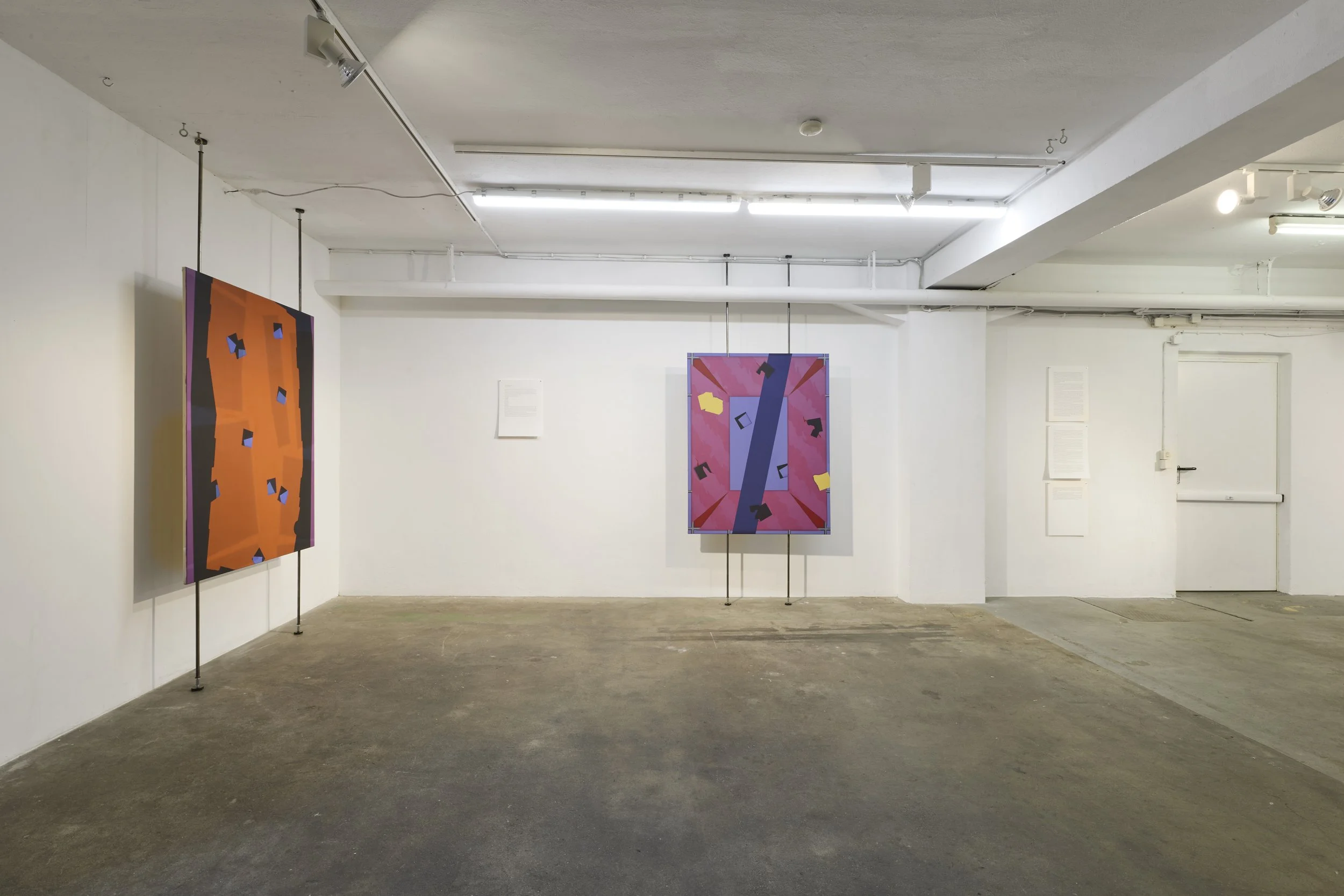
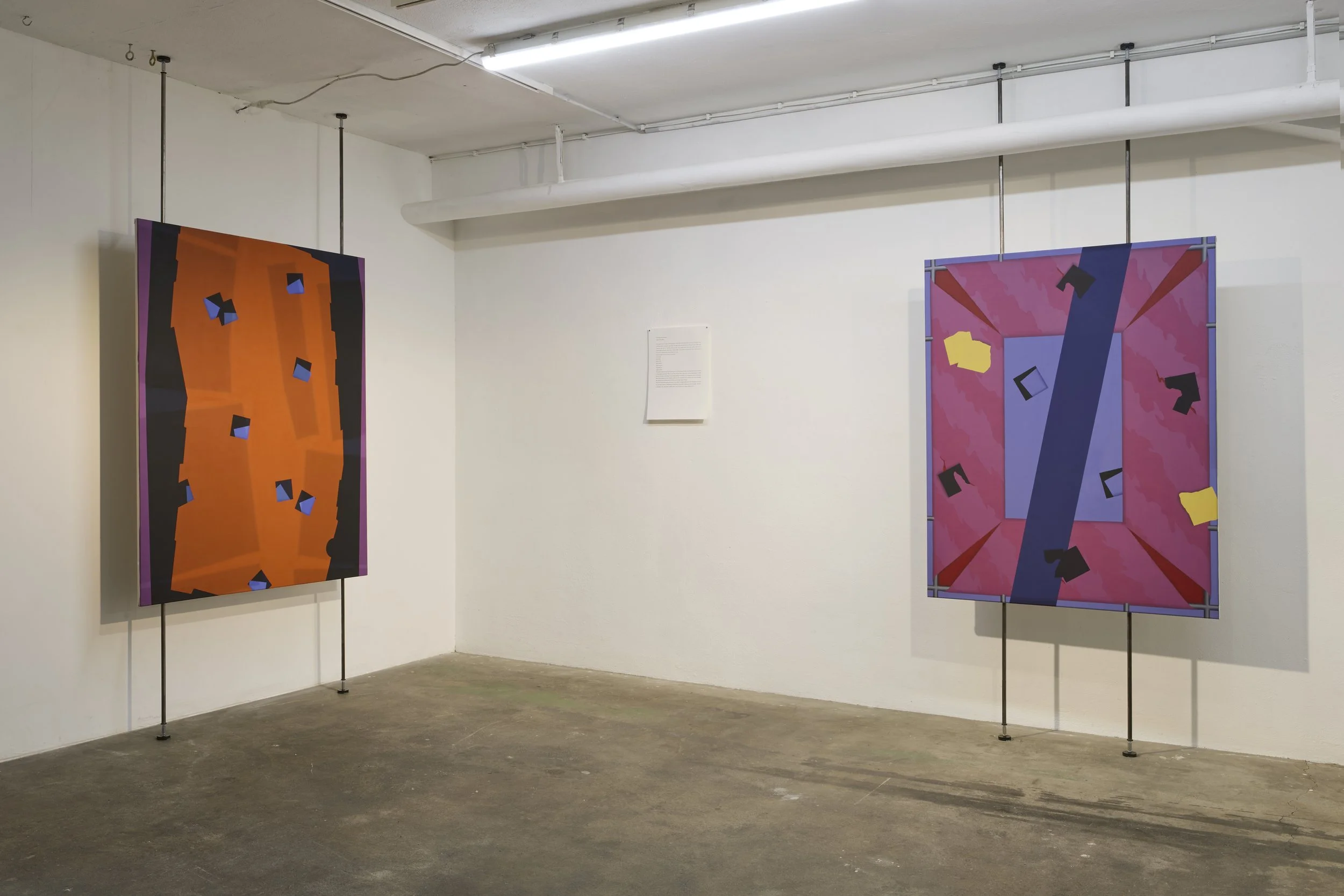
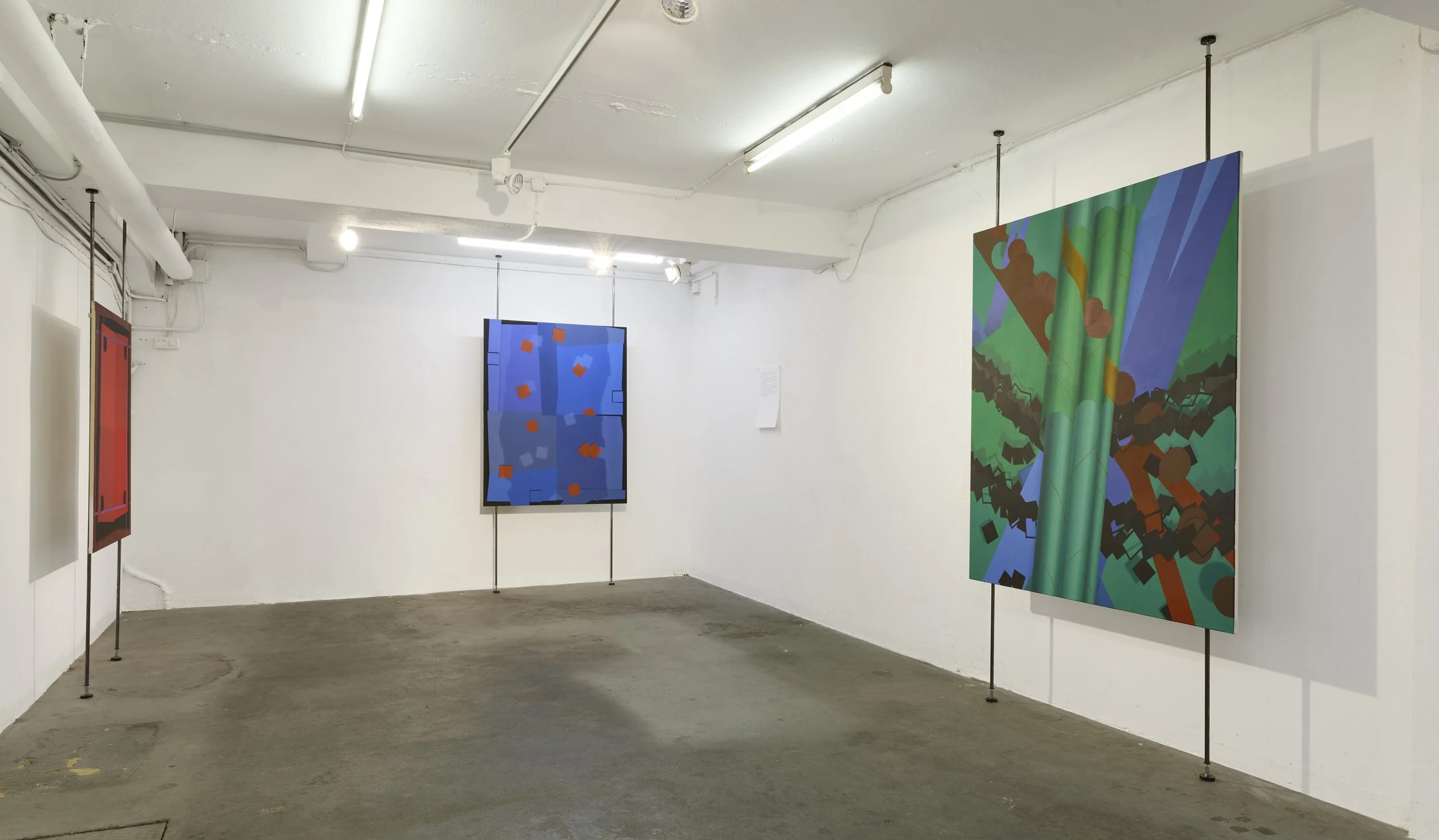
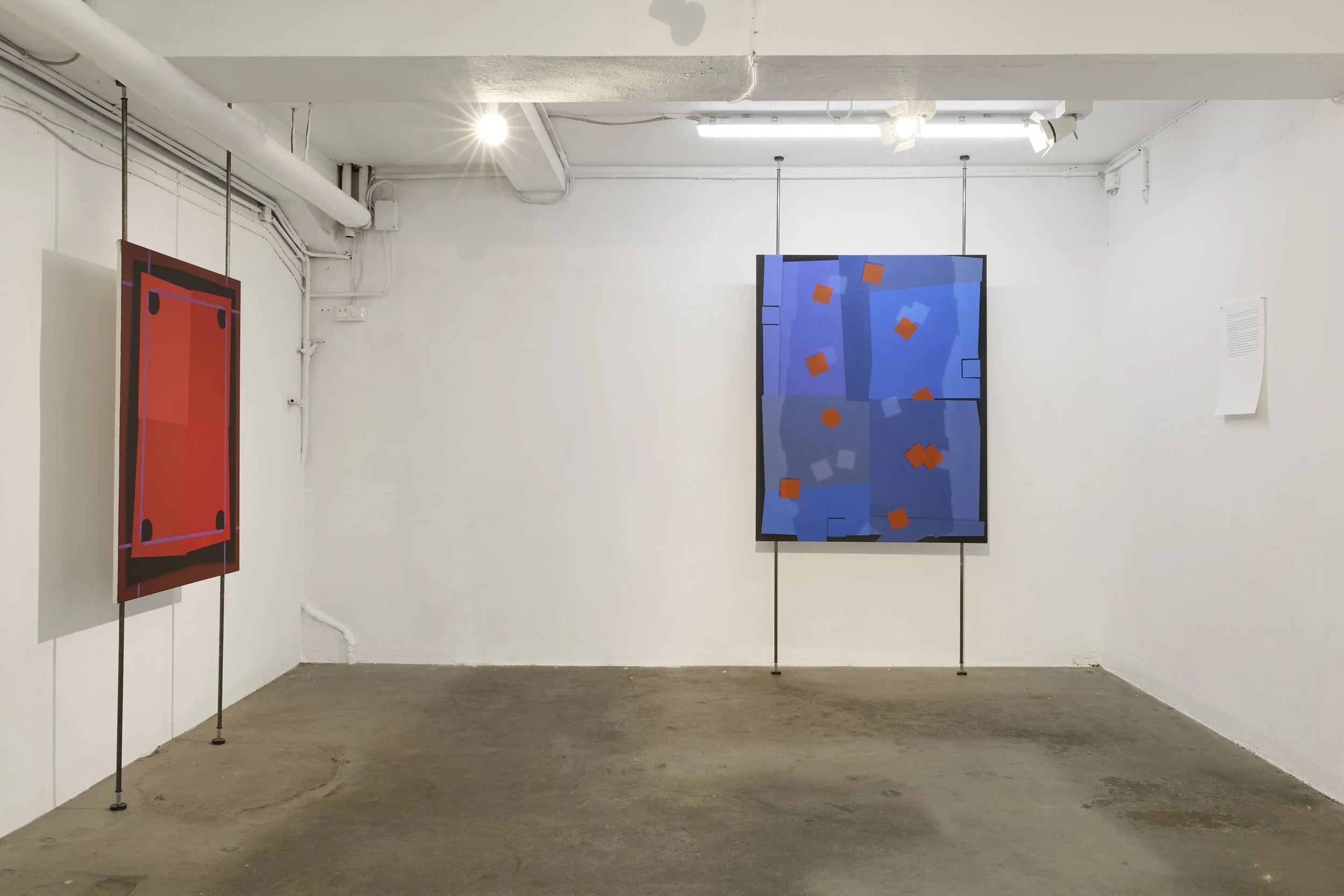
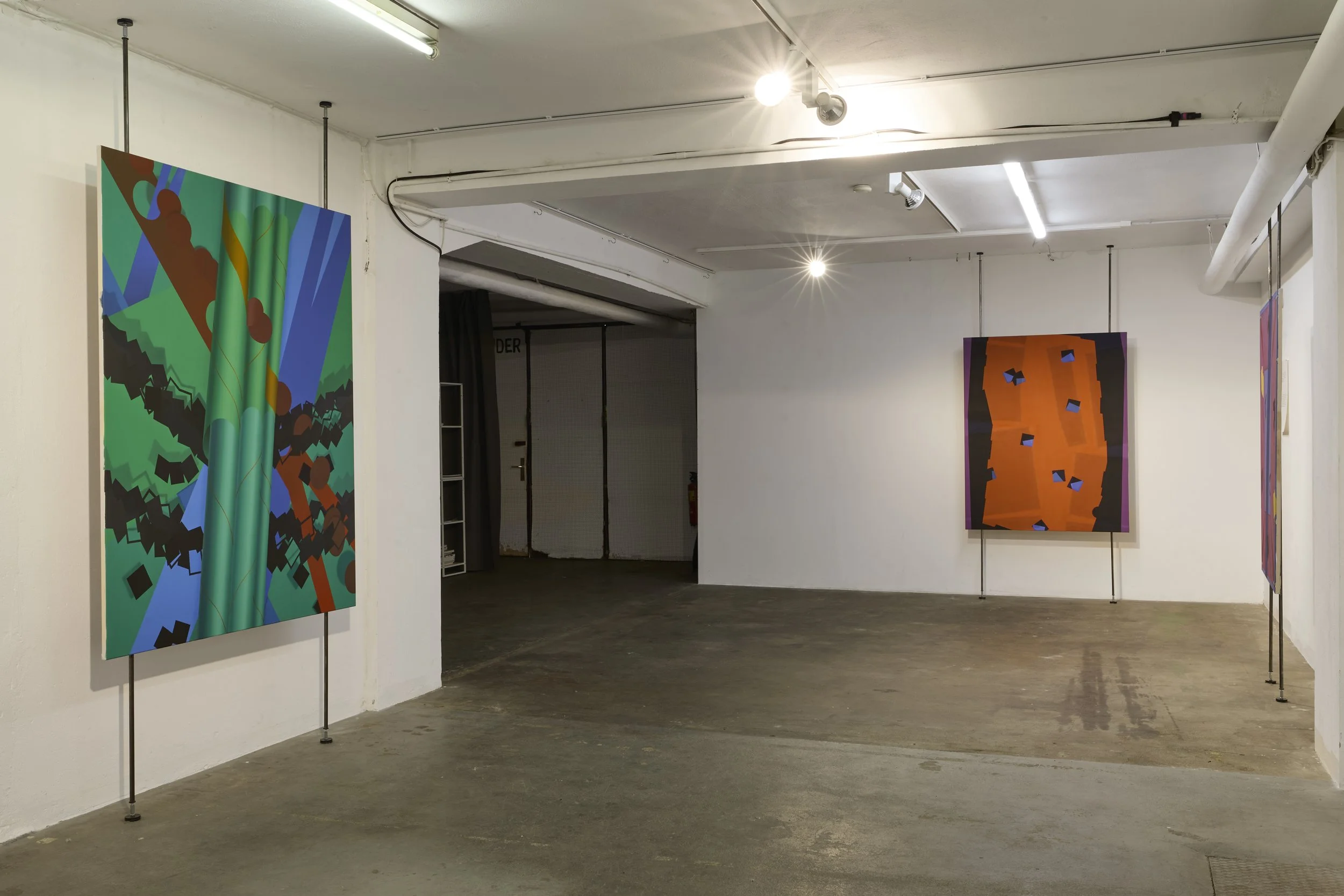
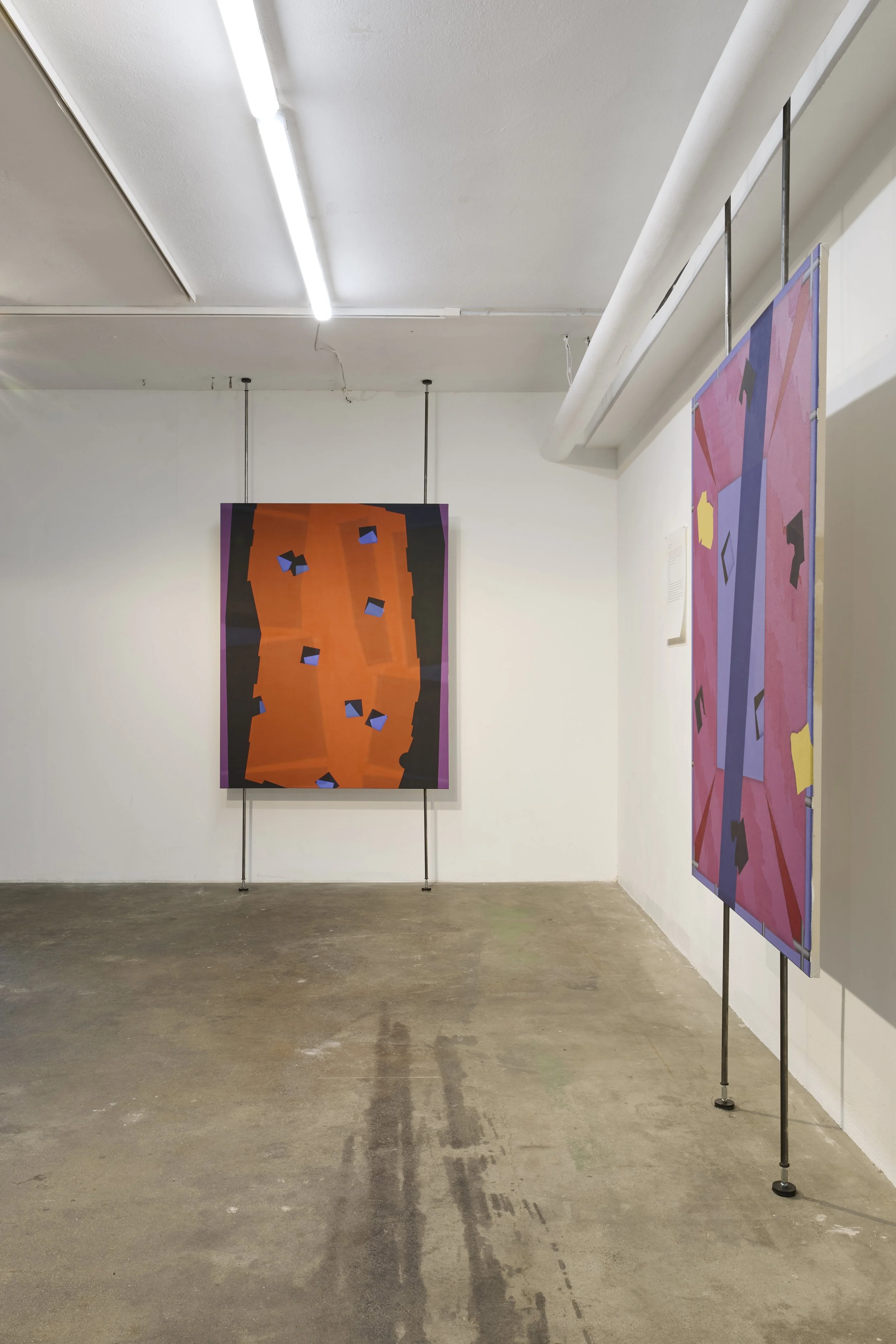
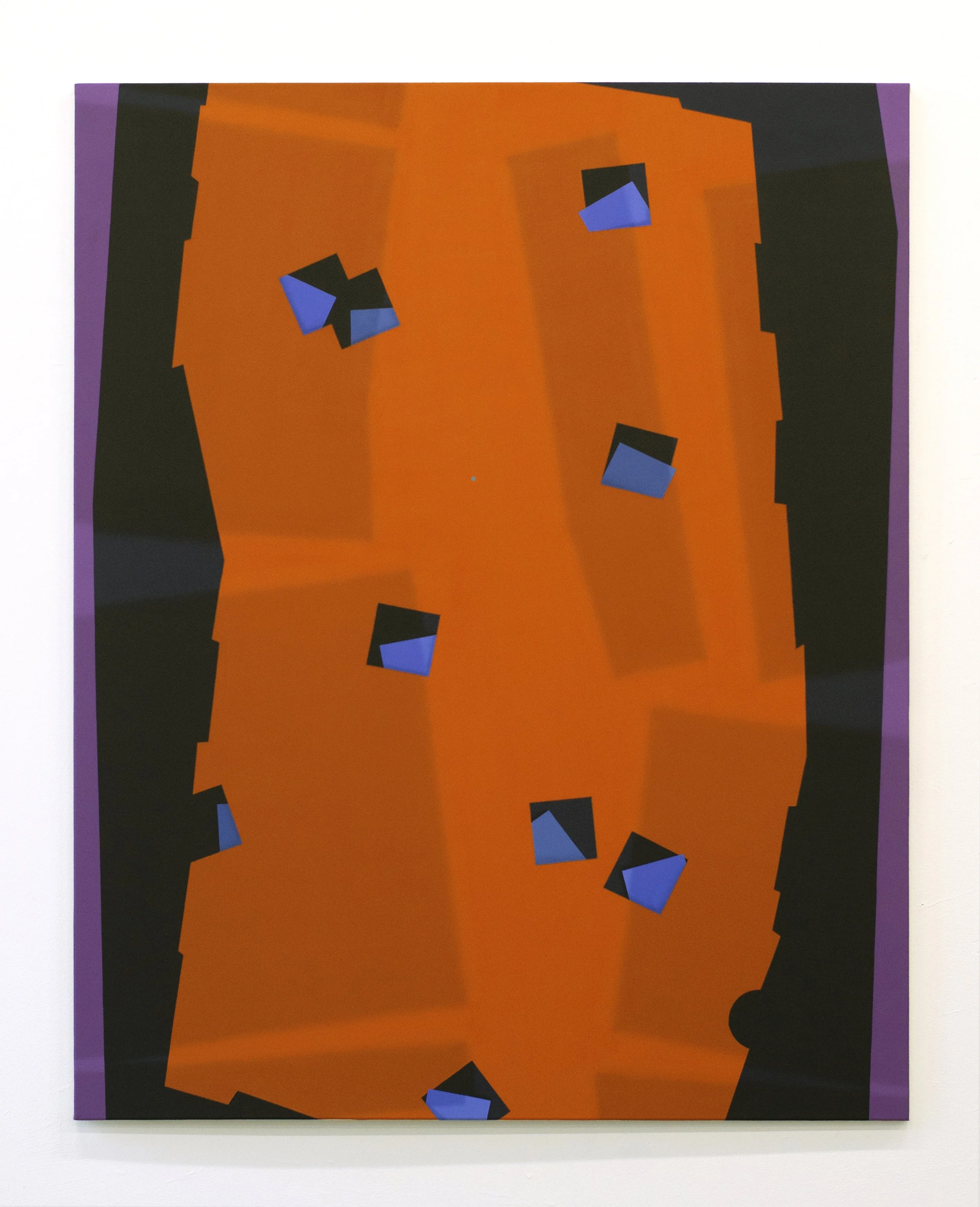
Harbour
oil on canvas
120x150cm
2024
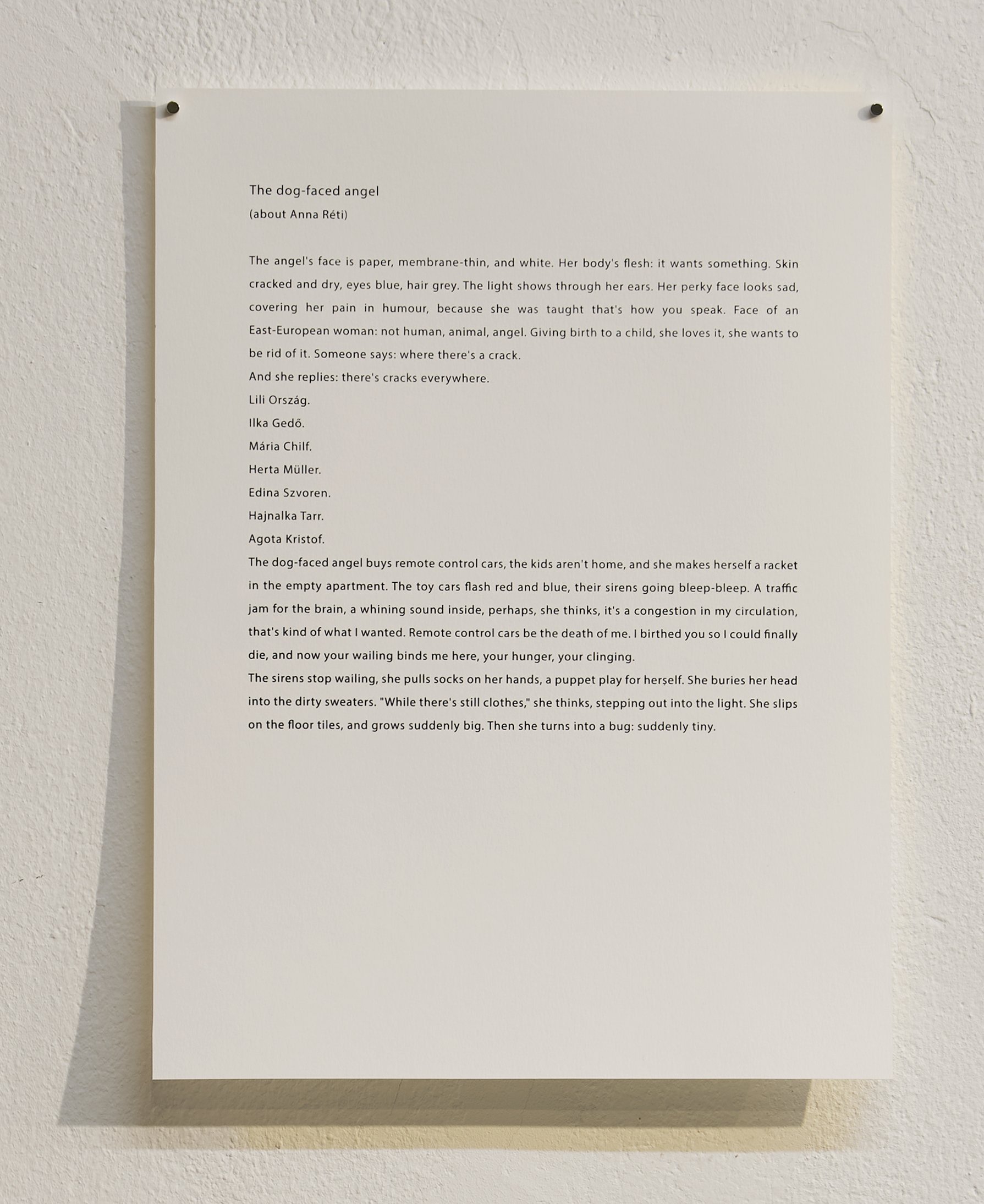
The dog-faced angel
silkscreen print
34x46cm
2021
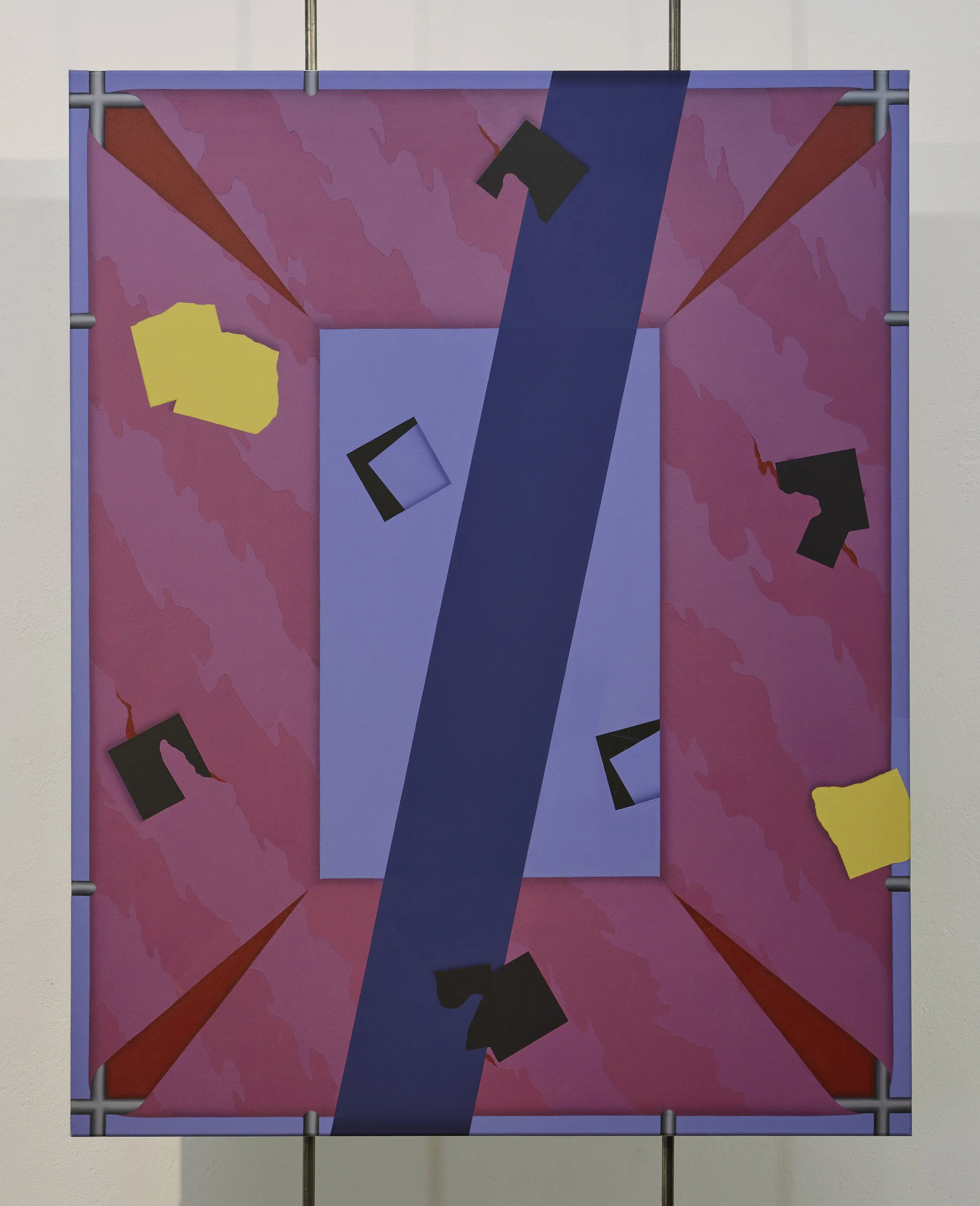
Sealed
oil on canvas
110x140cm
2025
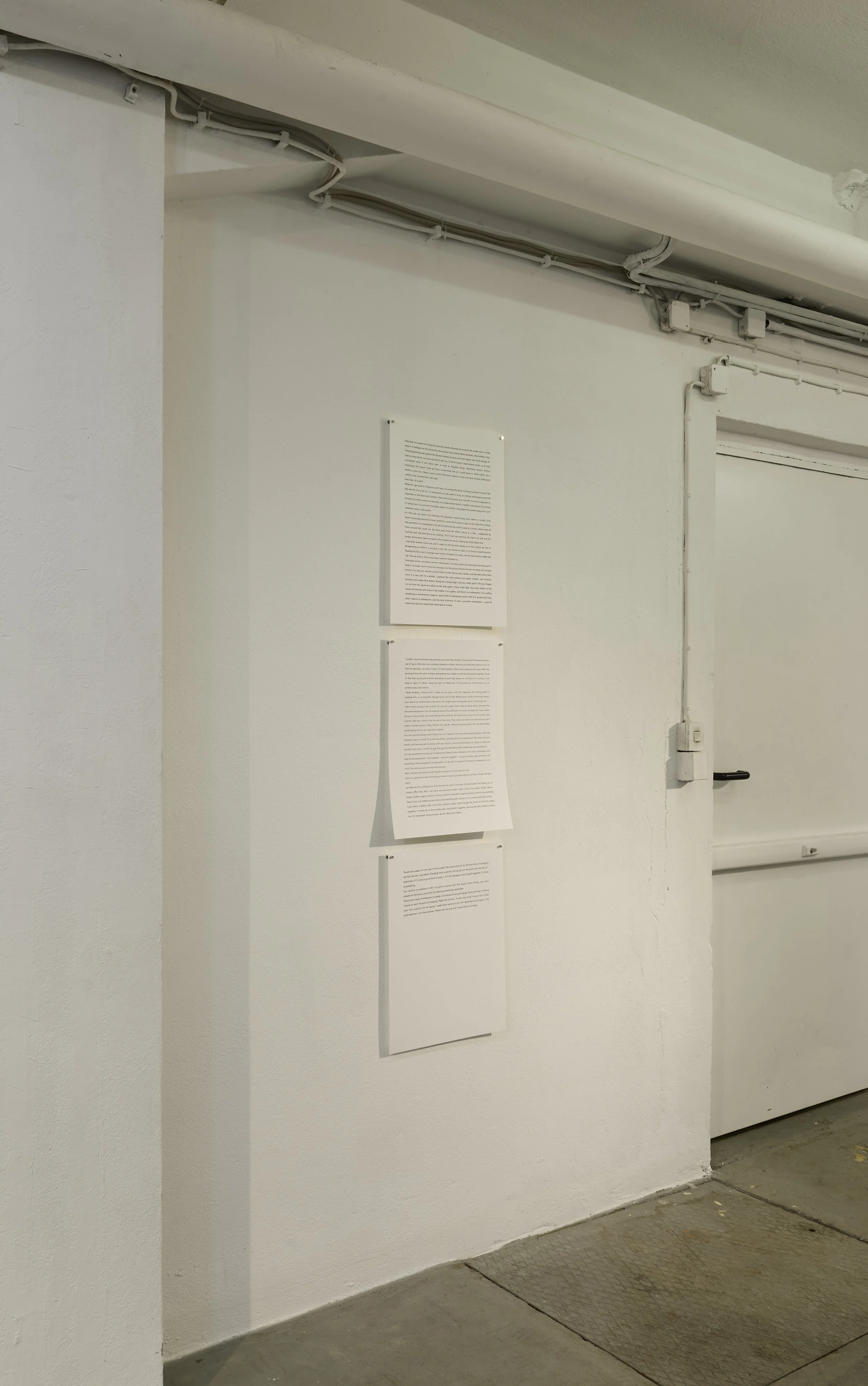
(Every day…)
silkscreen print
34x140cm
2023
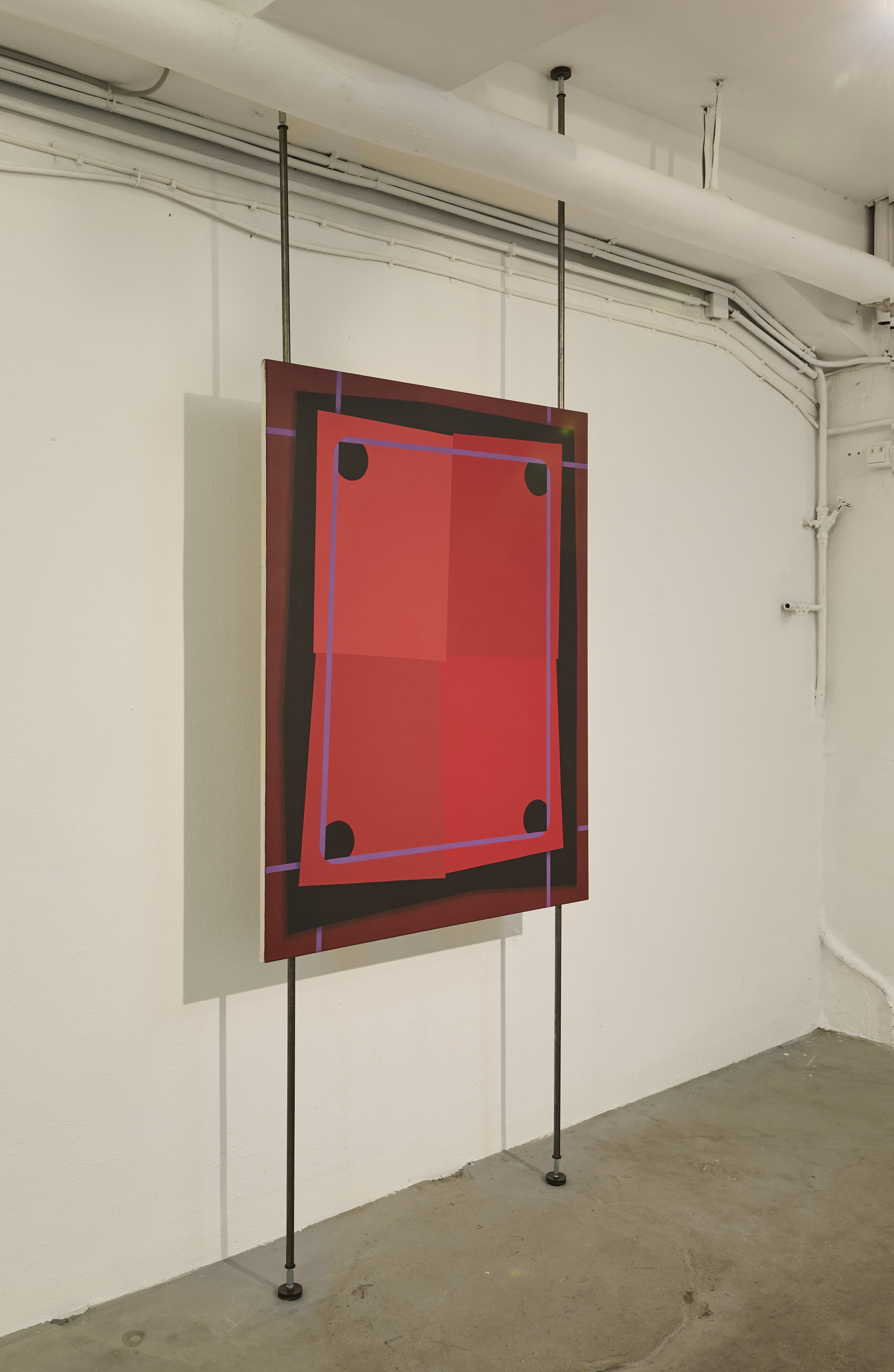
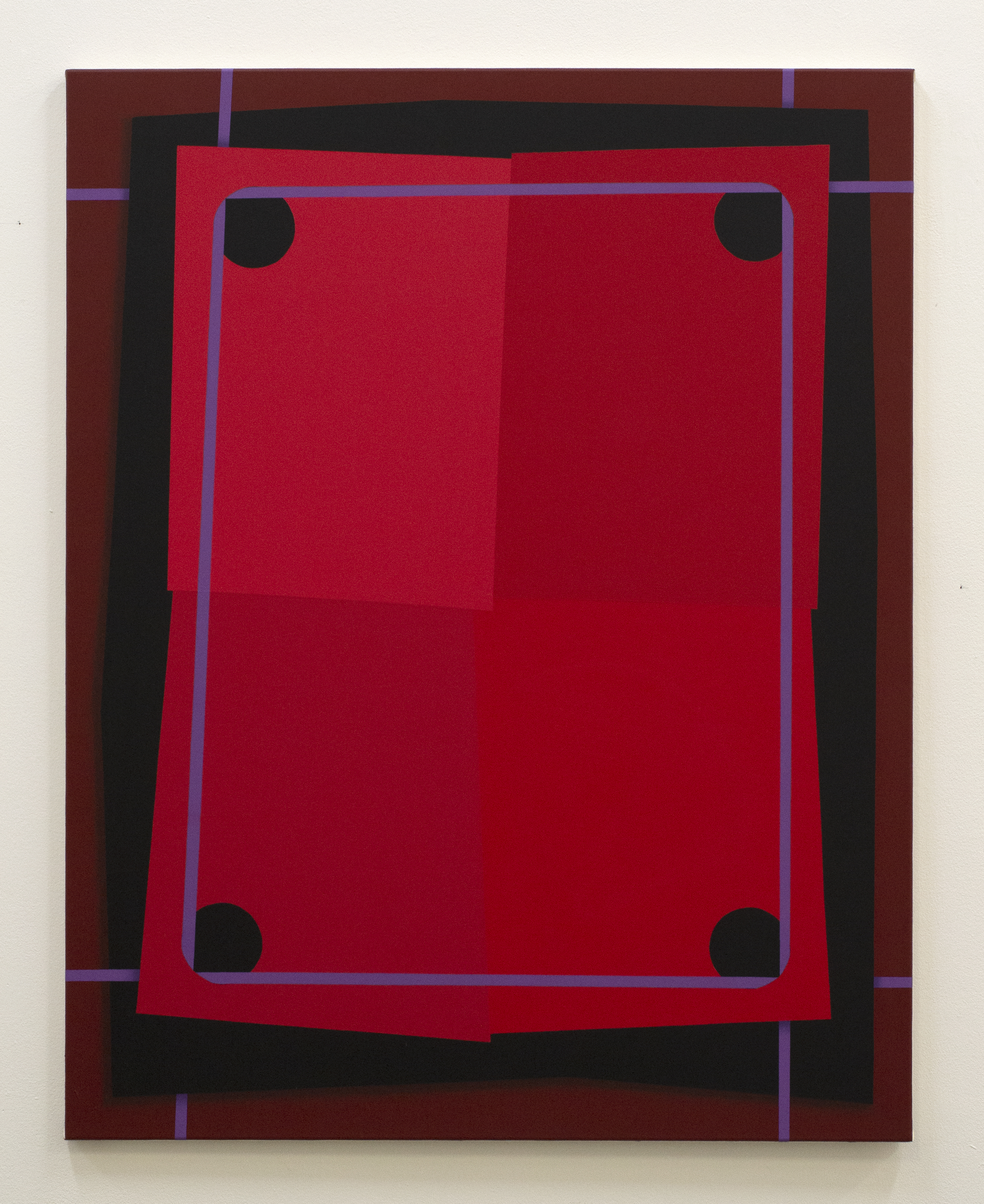
Painting
oil on canvas
95x120cm
2023
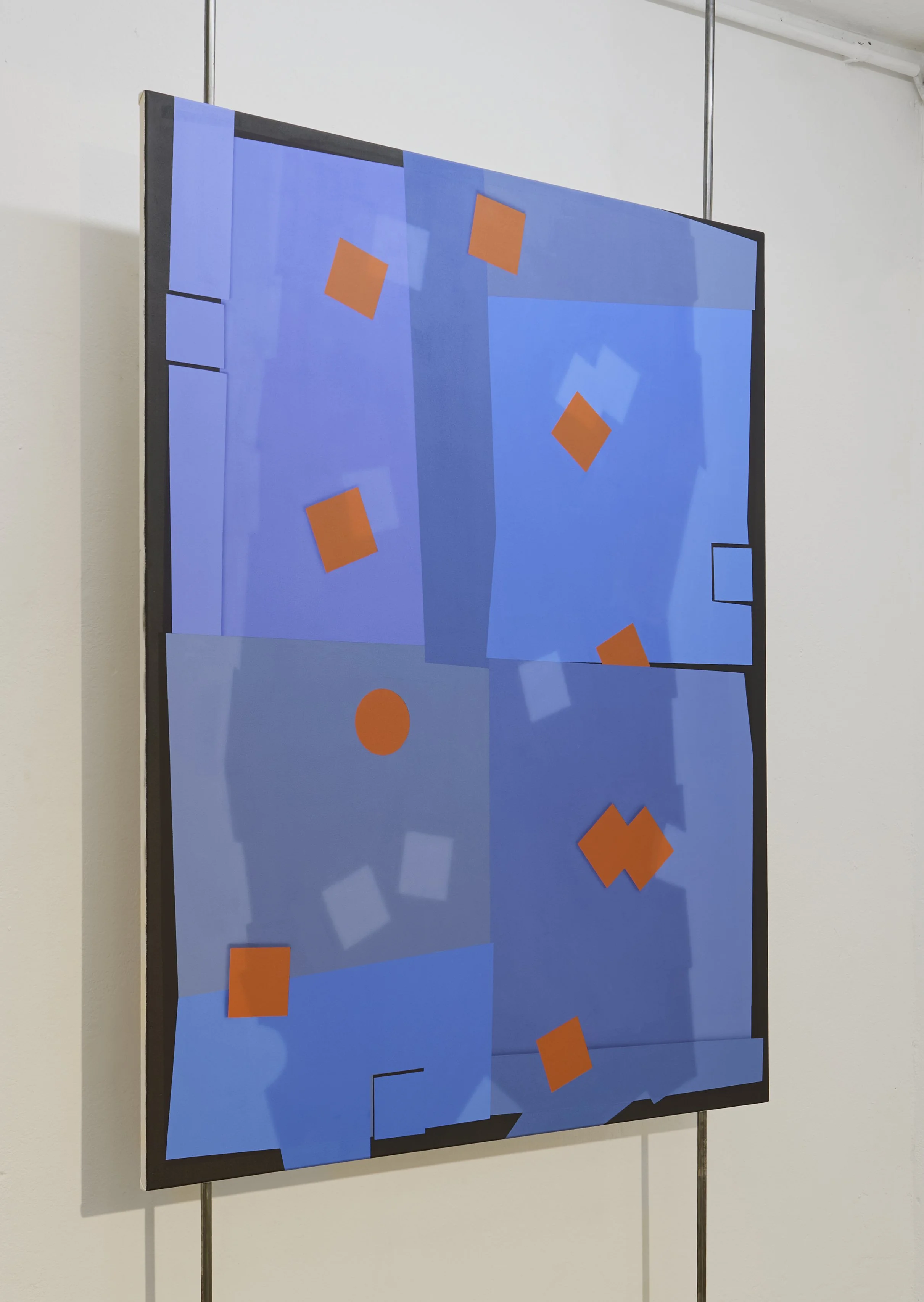
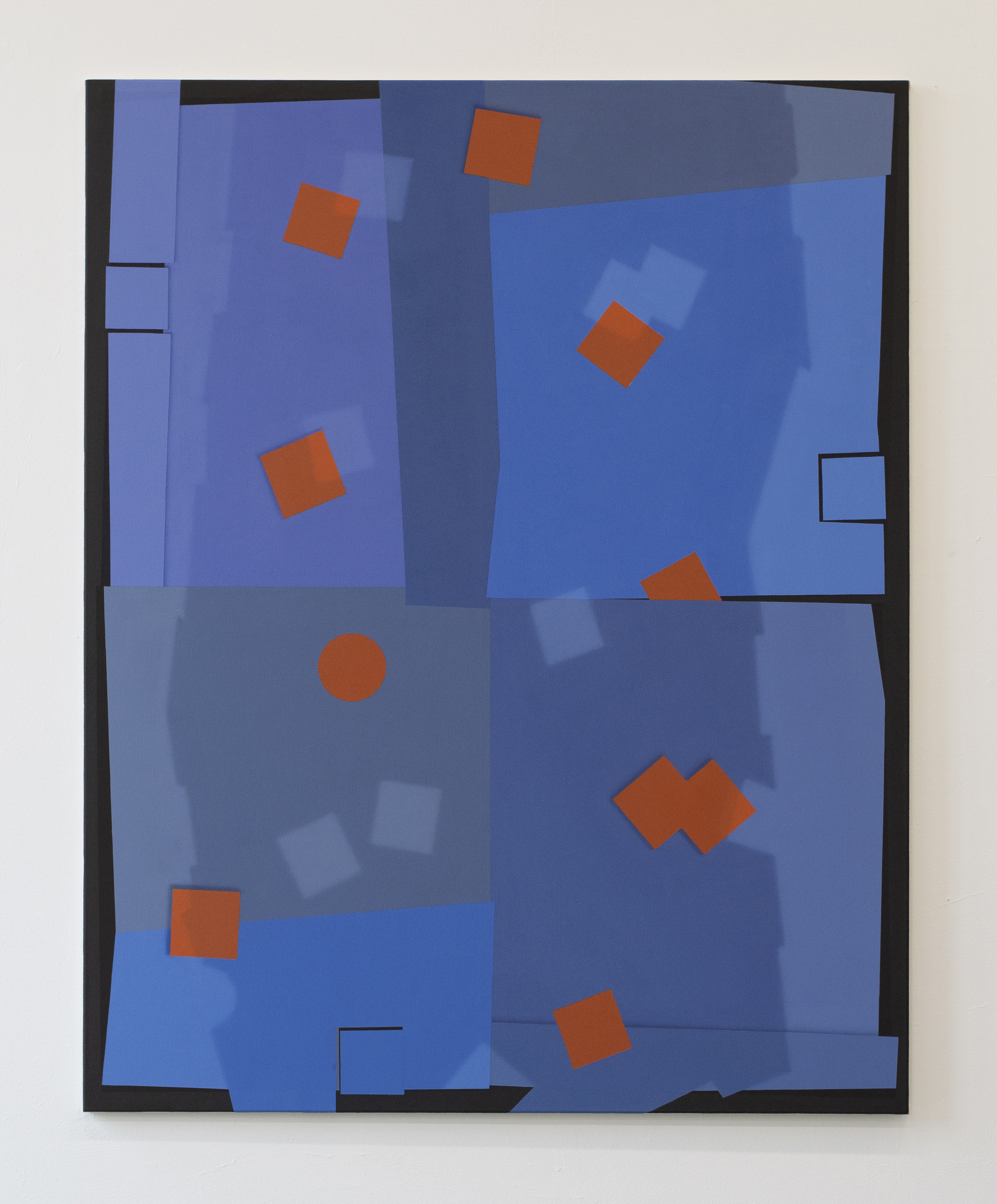
I thought we were playing
oil on canvas
120x150cm
2024
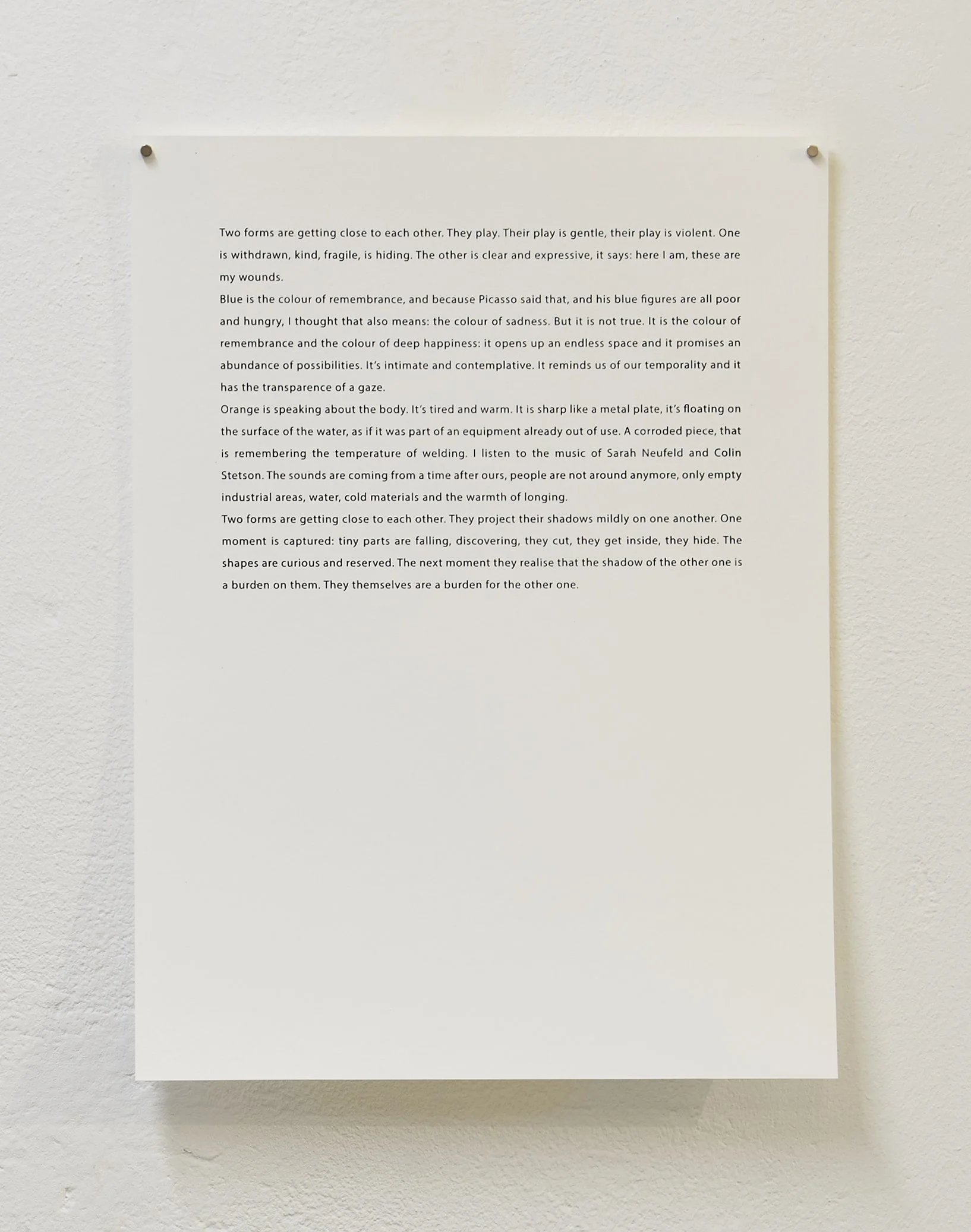
(Two froms are…)
silkscreen print
34x46cm
2024
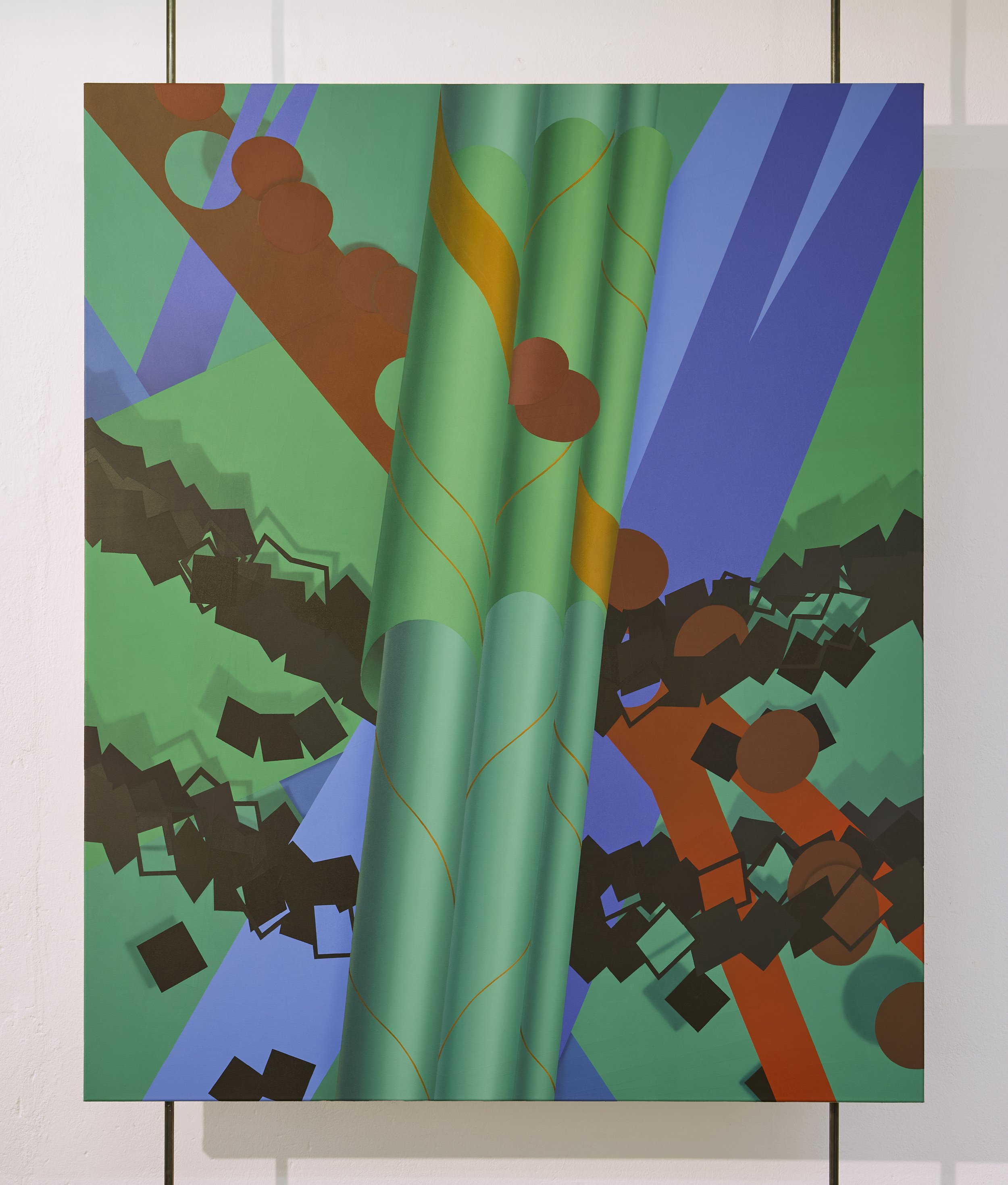
Captured
oil on canvas
140x170cm
2026
texts shown at the exhibition:
The dog-faced angel
(about Anna Réti)
The angel's face is paper, membrane-thin, and white. Her body's flesh: it wants something. Skin cracked and dry, eyes blue, hair gray. The light shows through her ears. Her perky face looks sad, covering her pain in humor, because she was taught that's how you speak. Face of an East-European woman: not human, animal, angel. Giving birth to a child, she loves it, she wants to be rid of it. Someone says: where there's a crack.
And she replies: there's cracks everywhere.
Lili Ország.
Ilka Gedő.
Mária Chilf.
Herta Müller.
Edina Szvoren.
Hajnalka Tarr.
Agota Kristof.
The dog-faced angel buys remote control cars, the kids aren't home, and she makes herself a racket in the empty apartment. The toy cars flash red and blue, their sirens going bleep-bleep. A traffic jam for the brain, a whining sound inside, perhaps, she thinks, it's a congestion in my circulation, that's kind of what I wanted. Remote control cars be the death of me. I birthed you so I could finally die, and now your wailing binds me here, your hunger, your clinging.
The sirens stop wailing, she pulls socks on her hands, a puppet play for herself. She buries her head into the dirty sweaters. "While there's still clothes," she thinks, stepping out into the light. She slips on the floor tiles, and grows suddenly big. Then she turns into a bug: suddenly tiny.
translated from Hungarian by Dani Dányi
Every day, I’m scared. For losing my necessary means allowing me to paint. My studio, that is, three meters of wallspace at the University, the money, those broad white windows, that endless time. Finished paintings lean against the drywall, taking up more and more space, too much already. If I took as many home, my room would fill right up. To think clearly I need empty rooms, or at least uncluttered ones. If not think, then at least to imagine things. Bratislava, Košice, Vienna, Strasbourg. The reason I took up these scholarships was so I could sleep in white rooms, for a month or even two. Sleep is more restful with fewer objects. A bed and desk, private bathroom, cabinet, chair: levelled time, dull light.
Every day, I’m scared. Whatever I get used to, I forget to call it fear, I’m writing this down to bring it all back to mind. The idea was for me to lie less. In emigration you get used to lying, to smiling and keeping yourself organized, or else face total isolation. Then that lie becomes your new life. It’s not an opposite to honesty, more like a veneer on my body, or a cloak without which I couldn’t even move. It’s not that I’m lying to you, I’m just not in the place where I should be. I would peel the veneer away, but I can’t remember what’s underneath.
As a first rule: you need to be charming. The Egyptians would hardly have taken in Joseph, if he weren’t amazingly beautiful. Clever, attentive, canny. Did he have to give up the faith of his father, that says there is no redemption? No, all he had to do was stash it away in a corner, where none of those around him could see. He lived away from the others. Venus as a Boy – suggested by YouTube, well informed about my readings. This’ll start my morning, the lights are soft and the purple, whiny music takes me back to the simulacrum world, making my body lighter too.
I read what Jorinde shows me, and it seems to tell me that saying no to the culture we live in, antagonizing our fathers, is also just a role. You can choose to take it, or choose something else. Reading this feels nice, it changes how I move. I forward it to Hajni, she too hails back to Kafka like I do. Then we drop it, there’s too many countries between us.
Dark moist winter, rich green summer: time passes, I’m using colors and learning to put my trust in forms. I no longer want to force my message into the picture. Khanh tells me these are tranquil pictures. Yes, they are, smooth uniform fields of color that accept trouble, and describe rather than resist. It is war, and I’m a painter. I pretend the color surfaces are paper cutouts, and violence becomes form rather than theme. Along the cutting edges, the face slides apart. The eye-shapes cut out from the square are afloat on the next paper, a blue sheet. Max sees razor blades in the shapes left behind, with holes in the middle. It is a game, and there’s no redemption. I’m reading something on monotheistic religions, about faith in redemption, what’s left of it: productive lives, about rapture as redemption, and the total dismissal of even a possible redemption. I seem to understand why the Jewish faith never fails to irritate.
I realize I must eventually stop painting, even painting, though it had seemed the most economic use of space. Why does your existence depend on them, what do you need these pictures for? To find my bearings: see what is there. To hold together what would otherwise fall apart. With the passing of time the splits multiply, demanding more staples to hold the framework together. Three or four days passing by without attending my paintings leaves me confused. It’s a surface I can keep in sight; it’s where I keep my sight on. Where am I? All pictures are self-portraits, as I’ve written many times before.
I keep thinking I should write, it takes up no space, and isn’t expensive. All writing needs is walking-time, or cycling-time, though quite a bit of that. Writing won’t work in enclosed spaces, you need to be outside and on the move. This might mean writing takes place in the body too.
I don’t write, because I have a body. All I can do is paint, that’s what my body wants. Oil paint has the same temperature I do, the material doesn’t feel different from what I’m made of. I want colors, because I have a body, not words that merely evoke life. Yes but these pictures are also words, says Camran, who has a desk at the far end of the room. They really are words too, because you can’t make a relevant picture today without the specific, without knowing about the murdered body, and knowing that we are reduced to objects.
You can’t pretend photos aren’t there. You can’t rewind to the time before photography, when life had been closer to itself. Or to the time before settling; there’s no going back. The empty sky was fearful, and here you are in a room, with your objects, and central heating; it is safety, it’s what you wanted. Only colors can fill the gap, the gap that left behind after wandering was abandoned.
Lan says painting is more prone to melancholy than to humor. Because of its roots, it probably can’t help being melancholic. And laughter – even dry laughter – is essential when logic presides over everything. Those pragmatic consideerations. To be able to laugh at what you’re vulnerable to is a must; the only way you can ease the pressure.
When I finally learned to accept myself as a painter, I’ll just have to stop.
If you’re scared every day of losing your means to paint, go paint a picture of that, it’ll take the fears away!
Lan tells me it’s a cold picture, that the reds are cold. To my eyes it looks heated. The shapes are so simple, office-like, that I can allow any emotional color I want. Circle, line, plane, below, above, paper, shadow, space, tension. To pose questions relevant to painting alone, and not say anything. That’s how it all ended up describing how painting and I connect. It’s a complicated relationship.
I put down a sketch with a lot more colored stripes, tied through the holes to bind the pages together. It ended up so four purple ones could hold it together, leaving the holes visible surfaces too. It’s important, because holes are for office and stigma.
The picture’s ready. It’s over now, I‘m not scared. This works, and not for the first time, in changing me from the way I was before. Changing me as a person. Giving up isn’t the point, but the lack of attachment. If I’ll have to go without a studio, I will still manage to hold myself together, I’ll think of something.
Your solution to problems in life is to paint a picture. But that doesn’t solve things, you must prepare for the future, practically, by learning something marketable.
The picture’s ready. And because it is ready, I will be able to let painting go. Each painting is making it easier to reach the point of stopping. That’s the solution, it’s the only thing I’ve got, but it does work. This is exactly like me saying I could never work at a job with deadlines and projects. The great deadline is out there anyway. There’s only the one, and I would like to be ready.
translated from Hungarian by Dani Dányi
Two forms are getting close to each other. They play. Their play is gentle, their play is violent. One is withdrawn, kind, fragile, is hiding. The other is clear and expressive, it says: here I am, these are my wounds.
Blue is the colour of remembrance, and because Picasso said that, and his blue figures are all poor and hungry, I thought that also means: the colour of sadness. But it is not true. It is the colour of remembrance and the colour of deep happiness: it opens up an endless space and it promises an abundance of possibilities. It’s intimate and contemplative. It reminds us of our temporality and it has the transparence of a gaze.
Orange is speaking about the body. It’s tired and warm. It is sharp like a metal plate, it’s floating on the surface of the water, as if it was part of an equipment already out of use. A corroded piece, that is remembering the temperature of welding. I listen to the music of Sarah Neufeld and Colin Stetson. The sounds are coming from a time after ours, people are not around anymore, only empty industrial areas, water, cold materials and the warmth of longing.
Two forms are getting close to each other. They project their shadows mildly on one another. One moment is captured: tiny parts are falling, discovering, they cut, they get inside, they hide. The shapes are curious and reserved. The next moment they realise that the shadow of the other one is a burden on them. They themselves are a burden for the other one.